
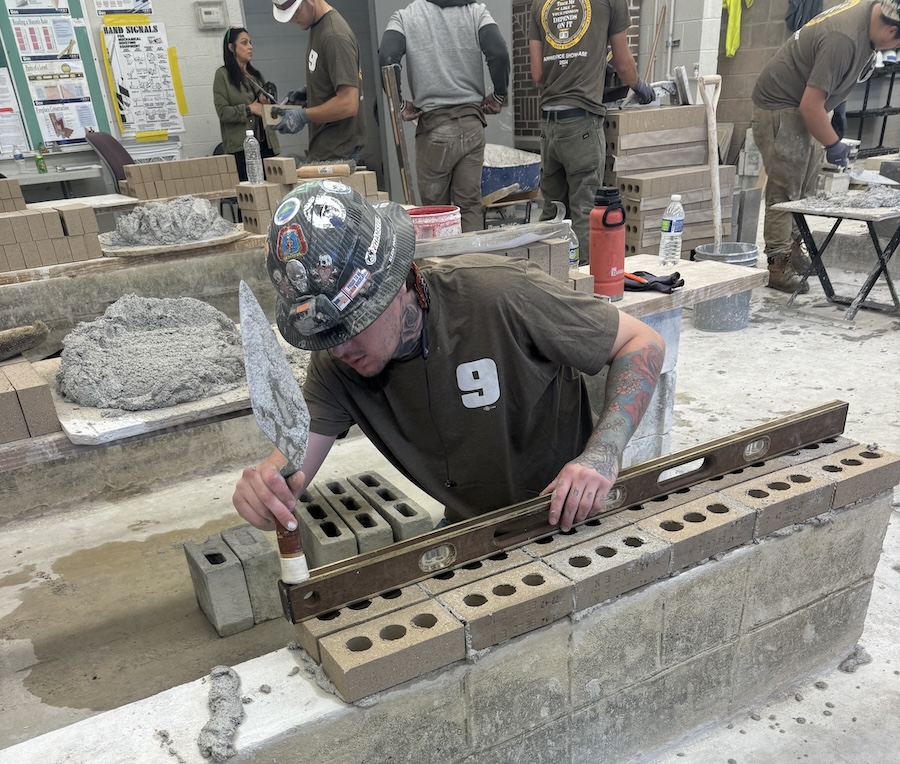
Across the United States, a growing number of adults in their 20s, 30s, and even 40s are rethinking their career paths, with many landing in skilled trades like bricklaying, stone masonry, and tile work. What was once seen as a “fallback” option, is increasingly viewed as a smart, stable, and financially sound pivot.
A major driver behind this shift is simple: demand. The construction industry is facing a significant labor shortage, with the need for approximately 349,000 new workers in 2026 alone, according to Associated Builders and Contractors. Compounding the issue, nearly 40% of the current construction workforce is expected to retire by 2031, creating a massive gap that younger and mid-career workers are now stepping in to fill.
For those considering a career change, the financial appeal is also strong. The U.S. Bureau of Labor Statistics reports that construction and extraction occupations had a median annual wage of $58,360 in 2024, which is higher than the national median across all occupations. Many trades, including masonry and tile work, offer opportunities for overtime, union benefits, and steady wage growth without the burden of student debt.
Beyond pay, job security is a major factor. The skilled trades are considered largely resistant to automation and artificial intelligence, unlike many white-collar roles. At the same time, the Bureau of Labor Statistics projects continued growth across trade careers, with some occupations seeing significantly above-average growth rates through the next decade.
Perhaps most importantly, the pathway into these careers is more accessible than ever. Apprenticeships allow workers to earn while they learn, making it feasible for adults to transition careers without starting from scratch financially.
As infrastructure spending rises and experienced workers retire, the demand for skilled tradespeople, especially in hands-on crafts like bricklaying, stone masonry, and tile work, shows no signs of slowing. For many Americans, that reality is turning a career change into a career upgrade.